반응형

경기순환 4단계(확장·정점·수축·저점) 이해하기
경제는 늘 같은 속도로 성장하지 않습니다
경제는 항상 상승만 하거나 하락만 하지 않습니다.
확장 → 정점 → 수축 → 저점의 과정을 반복하면서 움직입니다.
이를 경기순환(Business Cycle)이라고 합니다.
“경기 파동을 읽어야 투자·정책이 보인다!”
경제는 직선이 아니라 물결. 네 단계만 이해해도 시장의 큰 그림이 그려집니다.
1. 경기순환이란?
- 실질 GDP·고용·소득·생산이 장기 추세 대비 위·아래로 흔들리는 반복 패턴.
- 주기 : 평균 7~10년이지만 기술 혁신·정책으로 변동.
- NBER(美)·한국은행 등 공인 기관이 공식 선언.
2. 4단계 핵심 특징
단계대표 지표 흐름시장 심리정책 스탠스
| 확장(Expansion) | GDP↑, 고용↑, 인플레이션 완만 | 낙관, 투자 확대 | 금리 점진 인상, 재정 축소 |
| 정점(Peak) | 성장 둔화 조짐, 물가 압력↑ | 과열·과신 | 긴축 가속, 유동성 회수 |
| 수축(Contraction) | 생산↓, 실업↑, 물가 하락(지연) | 불안·위험회피 | 금리 인하, 재정 확대 |
| 저점(Trough) | 지표 바닥·개선 조짐 | 비관→희망 | 경기부양 지속, 구조개혁 |
주요 이정표
- ISM·PMI 50선 돌파 ⇨ 확장·수축 전환 시그널
- 연속 두 분기 GDP 역성장 ⇨ 경기침체(수축기) 관례적 기준
- 소비자심리지수 반등 ⇨ 저점 통과 신호
3. 투자·비즈니스 전략
- 확장기
- 주식 : 경기민감주(산업재·소재).
- 기업 : 설비투자 확대, 재고 선제 구축.
- 정점기
- 주식 : 방어주(필수소비재·헬스케어) 이동.
- 기업 : 현금흐름 확보, 부채 구조조정.
- 수축기
- 채권·현금 비중 확대, 단기 국채 선호.
- 기업 : 비용 절감, 재고 축소.
- 저점기
- 주식 : 가치·소형주 저가 매수.
- 기업 : R&D 투자로 다음 확장기 준비.
4. 정책 대응 포인트
- 통화정책 : 경기과열 억제(정점) vs. 유동성 공급(수축·저점).
- 재정정책 : 자동안정장치(세입·복지) + 경기부양 패키지.
- 구조정책 : 노동·규제 개혁은 수축 후반~저점에 추진 시 저항 ↓.
5. 체크리스트로 단계 구분하기
- GDP 성장률 : 0선 상·하.
- 실업률 : 자연실업률 대비 추세 전환.
- 물가(PCE·CPI) : 상승 압력 vs. 디스인플레이션.
- 금리 스프레드(10Y-2Y) 역전 = 수축 예고.
- 주가·기업이익 모멘텀.
6. 한눈에 요약
- 경기순환은 확장→정점→수축→저점→확장으로 반복.
- 지표·심리·정책을 종합하면 체크리스트로 단계 식별 가능.
- 단계별 투자·경영 전략을 맞추면 리스크↓, 기회↑.
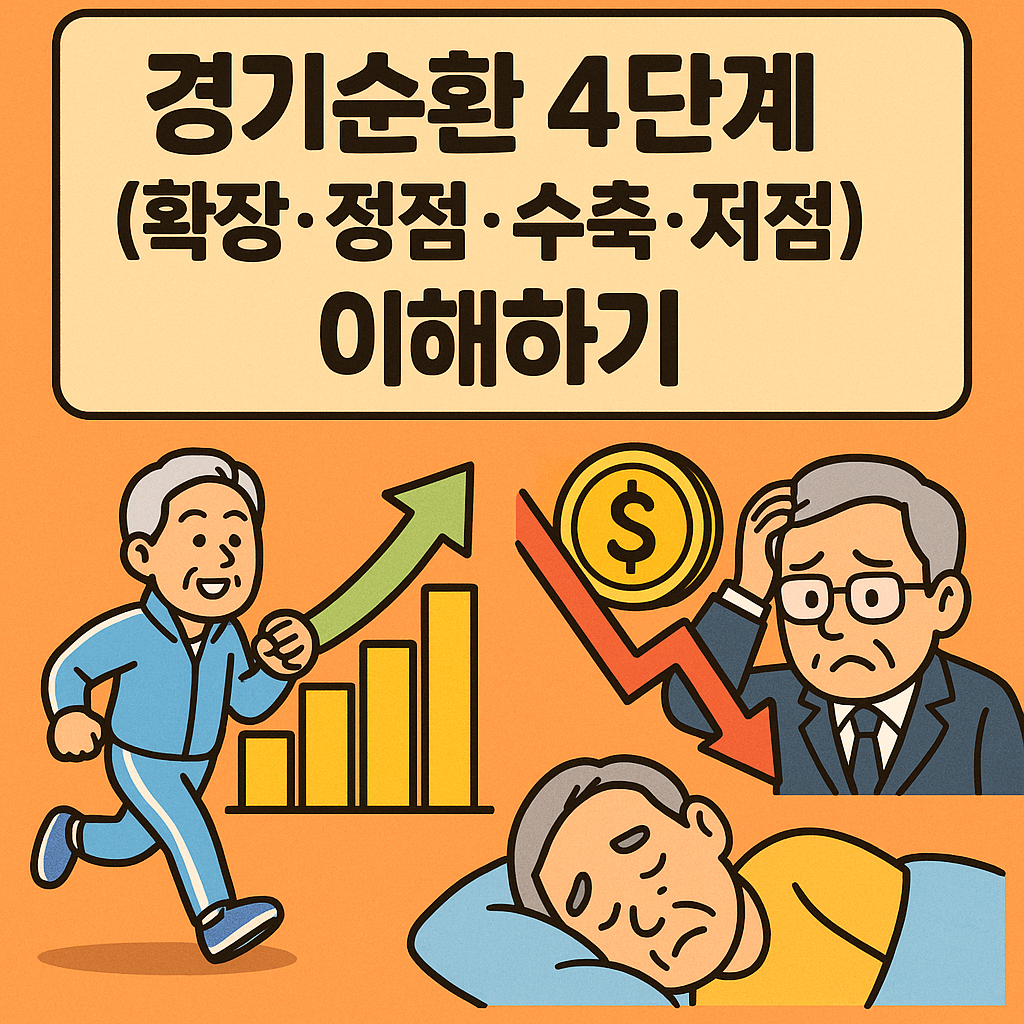
Understanding the 4 Phases of the Business Cycle (Expansion, Peak, Contraction, Trough)
The Economy Never Moves in a Straight Line
The economy doesn't just grow endlessly or shrink forever.
It moves through four phases: Expansion → Peak → Contraction → Trough.
This is known as the Business Cycle.
“Ride the economic wave—know the four beats of the cycle.”
The economy moves in waves, not straight lines. Mastering the expansion-peak-contraction-trough sequence sharpens market timing.
1. What Is the Business Cycle?
- Recurrent ups and downs of real GDP, employment, income, and output around a long-run trend.
- Typical length : 7–10 years, but tech and policy can shorten or stretch it.
- Official dating by bodies like the NBER or central banks.
2. Key Traits of the Four Phases
PhaseIndicator TrendMarket MoodPolicy Bias
| Expansion | GDP↑, payrolls↑, mild inflation | Optimistic, risk-on | Gradual rate hikes, fiscal pullback |
| Peak | Growth decelerates, inflation builds | Overheat, euphoria | Tighter money, liquidity drain |
| Contraction | Output↓, jobless↑, disinflation | Risk-off, fear | Rate cuts, fiscal stimulus |
| Trough | Indicators bottom, green shoots | Cautious hope | Ongoing stimulus, structural reform |
Guideposts
- ISM/PMI crossing 50 marks cycle turns.
- Two consecutive quarters of negative GDP often label a contraction.
- Consumer sentiment rebound can flag a trough.
3. Investment & Business Playbook
- Expansion : Cyclicals, capex, inventory build-up.
- Peak : Rotate to defensives, strengthen cash buffers.
- Contraction : Favor bonds/cash, cut costs and stock.
- Trough : Accumulate value/small caps, ramp up R&D.
4. Policy Response Cheatsheet
- Monetary : Cool excess heat at peak; flood liquidity in downturns.
- Fiscal : Automatic stabilizers plus discretionary stimulus.
- Structural : Labor & regulatory overhauls fit trough timing to lower pushback.
5. Quick Diagnostic List
- GDP growth crossing zero.
- Unemployment trend vs. natural rate.
- Inflation pressure vs. disinflation.
- Yield-curve inversion (10Y-2Y) foreshadows contraction.
- Earnings momentum and equity trends.
6. Takeaways
- The cycle repeats Expansion → Peak → Contraction → Trough → Expansion.
- Blend indicators, sentiment, and policy clues for accurate phase ID.
- Align portfolio, business, and policy to each phase to cut risk and seize opportunity.
반응형
'경제' 카테고리의 다른 글
| 재난지원금, 단순 지원이 아니다? 경제 전체에 미치는 영향 정리 (19) | 2025.04.29 |
|---|---|
| 경기 침체엔 재정정책? 통화정책? 차이를 확실히 이해하기 (14) | 2025.04.29 |
| 기회비용으로 선택의 질을 2배 높이는 5단계 전략 (16) | 2025.04.29 |
| 가격은 왜 오르내릴까? ‘수요·공급’ 한 장으로 끝내기! (10) | 2025.04.28 |
| 무역수지 vs 경상수지, 무엇이 다를까? 3분 완전 정리 (11) | 2025.04.28 |