
GDP 쉽게 이해하기: 국내총생산이 말해주는 것들
GDP는 왜 중요할까요?
뉴스에서 경제 이야기만 나오면 항상 등장하는 단어가 바로 GDP(국내총생산)입니다.
하지만 이 용어가 정확히 무슨 의미인지, 왜 중요한지를 이해하는 사람은 많지 않습니다.
GDP는 국가 경제를 측정하는 가장 기본적인 지표이며, 국민의 삶의 수준과 경제 흐름을 보여주는 ‘경제의 체온계’와 같습니다.
1. GDP란 무엇인가?
국내총생산(GDP, Gross Domestic Product)은 한 나라 안에서 일정 기간(보통 1년) 동안 새로 만들어진 모든 최종 재화와 서비스의 시장 가치를 합산한 지표다. “최종”만 세는 이유는 부품·원재료 등 중간재를 중복 계산하지 않기 위해서다.
2. 계산 방식 세 가지
| 지출 접근법 | GDP = C(민간소비) + I(투자) + G(정부지출) + (X–M)(순수출) | 가장 널리 사용, 경기 부양책·무역수지 분석에 유용 |
| 소득 접근법 | 임금 + 이자 + 지대 + 이윤 + 감가상각 | 국민에게 분배된 소득 관점에서 파악 |
| 생산(부가가치) 접근법 | 산업별 부가가치 합계 | 어느 산업이 가치를 많이 창출했는지 분석 |
3. 명목 vs 실질: 물가를 제거하라
- 명목 GDP: 해당 연도의 시장가격으로 계산 → 물가 상승분 포함
- 실질 GDP: 기준연도 가격으로 재계산 → 물가 효과 제거 → 순수한 ‘물량’ 성장률 파악 가능
예) 명목 5 %↑, 물가 3 %↑라면 실질 성장률은 약 2 %.
4. GDP 성장률이 의미하는 것
- 플러스 성장: 생산·소비·투자가 모두 늘어 경기 확장 국면
- 마이너스 성장: 두 분기 연속이면 기술적으로 ‘리세션(경기침체)’ 판단
- 속보치·확정치: 통계청은 통상 1·2·3차 발표 → 초기 데이터 오차 감안 필요
5. 1인당 GDP와 삶의 질
총량이 아닌 인구당 소득 수준을 보여준다. 그러나 분배(지니계수), 물가(PPP), 비시장 활동(가사노동) 등을 반영하지 못해 삶의 질을 완전히 대변하진 못한다.
6. 한계와 보완 지표
| 환경 파괴·탄소 배출 미반영 | 그린 GDP, 탄소당 GDP | 지속 가능성 고려 |
| 소득 불평등 숨김 | 지니계수, 소득 5분위 배율 | 분배 구조 점검 |
| 행복·건강 누락 | HDI(인간개발지수) | 교육·수명 포함 |
7. 실생활에서 GDP 활용하기
- 투자 전략: 실질 GDP 성장률이 예상치 상회 → 주식·원자재 수요 상승 가능성 검토
- 사업 계획: 민간소비(C) 증가 예상 업종에 마케팅·설비 확대
- 정책 이해: SOC 투자(I)·재난지원금(C) 확대가 단기 성장률을 끌어올리는 논리 파악
8. 결론
GDP는 국가 경제의 체온계다. 체온만으로는 병명을 확정할 수 없지만, 상승·하락 추이는 진단의 출발점이 된다. 명목·실질·1인당·성장률을 입체적으로 바라보면 경제 뉴스의 맥락이 훨씬 또렷해진다. 숫자를 넘어 **‘사람과 자원 흐름’**을 읽는 시야를 갖추는 것이 진짜 경제 읽기다.
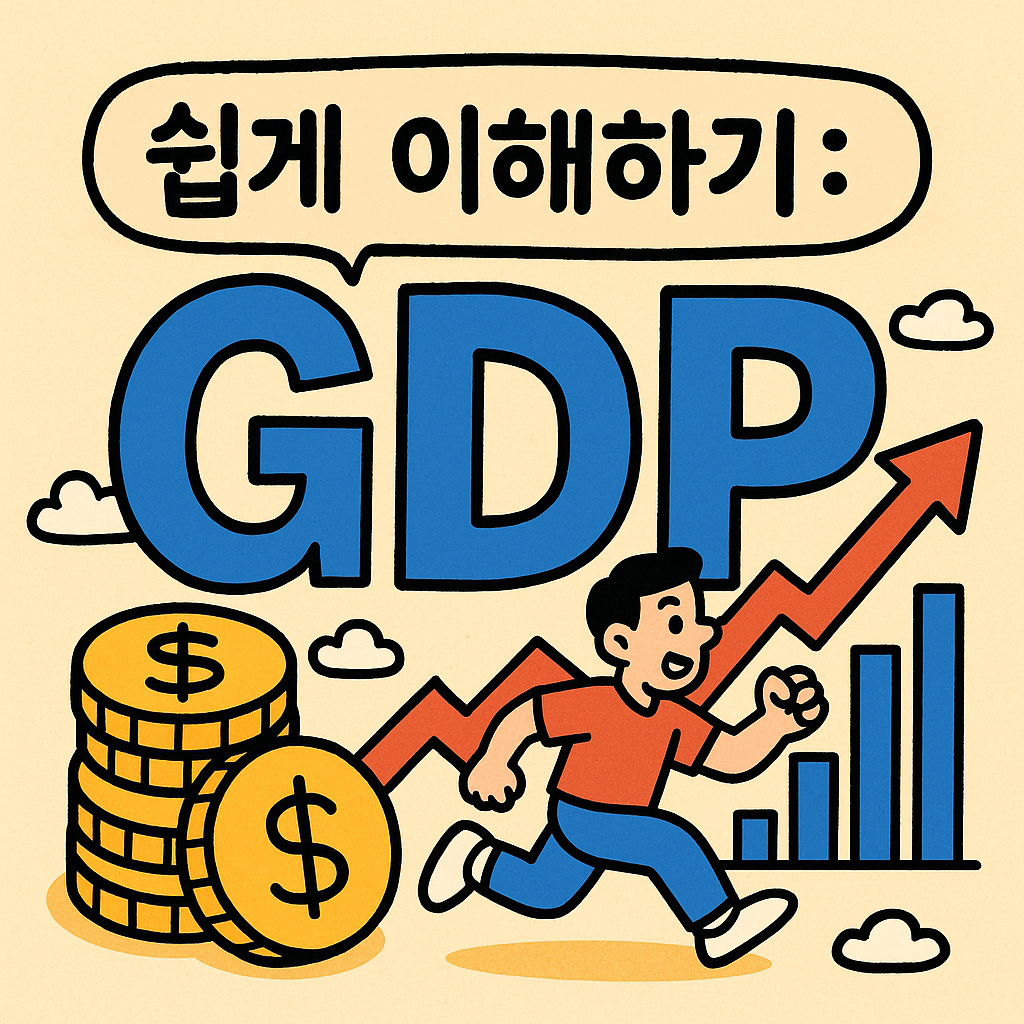
Understanding GDP Made Easy: What Gross Domestic Product Tells Us
Why Is GDP So Important?
GDP, or Gross Domestic Product, is a term we hear constantly in economic news.
But many people don’t fully understand what it means or why it matters.
GDP is the most basic measure of a country's economic performance, much like a thermometer for the economy.
1. What Exactly Is GDP?
Gross Domestic Product tallies the market value of all final goods and services produced within a country’s borders during a set period (usually a year). Counting only “final” output avoids double-counting parts and raw materials.
2. Three Ways to Calculate GDP
| Expenditure | GDP = C + I + G + (X–M) | Widely used; great for fiscal/ trade analysis |
| Income | Wages + Interest + Rent + Profit + Depreciation | Views GDP as people’s earned income |
| Production (Value-Added) | Sum of value added by each industry | Shows which sectors create the most value |
3. Nominal vs Real: Strip Out Prices
- Nominal GDP uses current prices—includes inflation.
- Real GDP rebases output to constant prices—removes inflation—so it shows pure volume growth.
Example: Nominal up 5 %, inflation 3 % → Real growth ≈ 2 %.
4. Reading GDP Growth
- Positive growth → expanding production, spending, investment.
- Negative growth for two straight quarters = technical recession.
- Advance vs final releases → early numbers can be revised; treat with caution.
5. Per-Capita GDP & Living Standards
Dividing by population gauges average income, yet ignores distribution, price levels (PPP), and unpaid work, so it only partly reflects well-being.
6. Limits & Complementary Indicators
| Ignores pollution | Green GDP, GDP per ton CO₂ | Adds sustainability lens |
| Masks inequality | Gini coefficient, quintile share | Checks income spread |
| Omits well-being | HDI (Human Development Index) | Adds education, life expectancy |
7. Putting GDP to Work
- Investing: Real growth beating forecasts hints at rising equity or commodity demand.
- Business Planning: If household spending (C) is set to grow, ramp up marketing or capacity in consumer sectors.
- Policy Literacy: See why government spending or infrastructure projects (G, I) are used as short-term growth boosters.
8. Conclusion
GDP is the thermometer of an economy. Temperature alone can’t diagnose every illness, but its direction is the starting clue. By unpacking nominal, real, per-capita, and growth figures, you turn raw numbers into insight about people and resource flows—the essence of reading an economy.