
채권, 주식, 부동산: 자산별 리스크와 수익률 비교
투자는 결국 리스크와 수익률의 선택
투자를 고민할 때 가장 먼저 고려해야 할 것은
얼마나 수익을 기대할 수 있고, 얼마나 리스크를 감당할 수 있는가입니다.
대표적인 투자 자산인 채권, 주식, 부동산을 비교해봅시다..
“안전·성장·실물, 어떤 비중이 내 목표에 맞을까?”
과거 데이터와 핵심 지표로 세 자산군의 수익·위험·헤지력을 비교해 봅니다.

1. 세 자산군 개요
- 채권(Bonds) : 정부·기업이 일정 이자를 약속하고 발행. 만기·신용도에 따라 위험도 상이.
- 주식(Equities) : 기업 소유 지분. 배당과 주가 상승에 따른 자본이익을 추구.
- 부동산(Real Estate) : 토지·건물 등 실물자산. 임대수익과 가치 상승이 수익원.
2. 장기 평균 수익률·변동성
| 채권 | 3 ~ 5 % | 4 ~ 7 % | 높음(국채)·보통(회사채) | 낮음 |
| 주식 | 7 ~ 10 % | 14 ~ 18 % | 매우 높음 | 중간 |
| 부동산 | 4 ~ 8 % (임대 포함) | 6 ~ 10 % | 낮음 | 높음 |
*수치는 글로벌 장기 평균(1980–2020) 참고치로, 시장·기간에 따라 달라질 수 있습니다.
3. 리스크 프로파일
- 채권
- 금리 리스크 : 금리↑ → 가격↓.
- 신용 리스크 : 발행자 파산 가능성.
- 주식
- 시장 리스크 : 경기·금융 변동에 민감.
- 사업 리스크 : 기업 실적·산업 구조 변화.
- 부동산
- 유동성 리스크 : 매각까지 시간·비용 소요.
- 지역·규제 리스크 : 입지, 세제, 개발 규제 변화.
4. 인플레이션·금리 국면별 성과
| 저금리·저물가 | 양호 | 양호 | 보통 |
| 고금리·고물가 | 부진 | 변동성↑, 헤지 중간 | 상대적 강세 |
| 침체·디플레이션 | 국채 강세 | 약세 | 거래 급감 |
5. 포트폴리오 설계 팁
- 안정성 중시 : 채권 60 % + 배당주 25 % + 리츠 15 %.
- 성장형 : 주식 70 % + 장기국채 15 % + 부동산 15 %.
- 인플레이션 헤지 : 부동산·리츠 40 % + 인플레 연동채 30 % + 경기 민감주 30 %.
규칙 : 목표 수익률·투자 기간·위험 감내도를 먼저 수치화하고, 상관계수(채권↔주식 음적, 주식↔부동산 약양성)를 이용해 분산효과를 극대화하세요.
6. 체크리스트
- 투자 목표(수익률·기간)와 리스크 허용치 정의.
- 유동성 필요 시 채권·상장 ETF 비중 확대.
- 인플레이션 기대치가 높으면 부동산·실물비중 고려.
- 경기순환 단계에 따라 리밸런싱 주기 설정.
- 세금·거래비용(취득세·양도세·커미션)까지 실수익으로 환산.
7. 한눈에 요약
- 채권: 변동성 ↓, 금리·신용 리스크 주의.
- 주식: 성장성 ↑, 시장 변동성 가장 큼.
- 부동산: 인플레 헤지 ↑, 유동성 ↓.
- 분산으로 세 자산의 강·약점을 상호 보완하라.
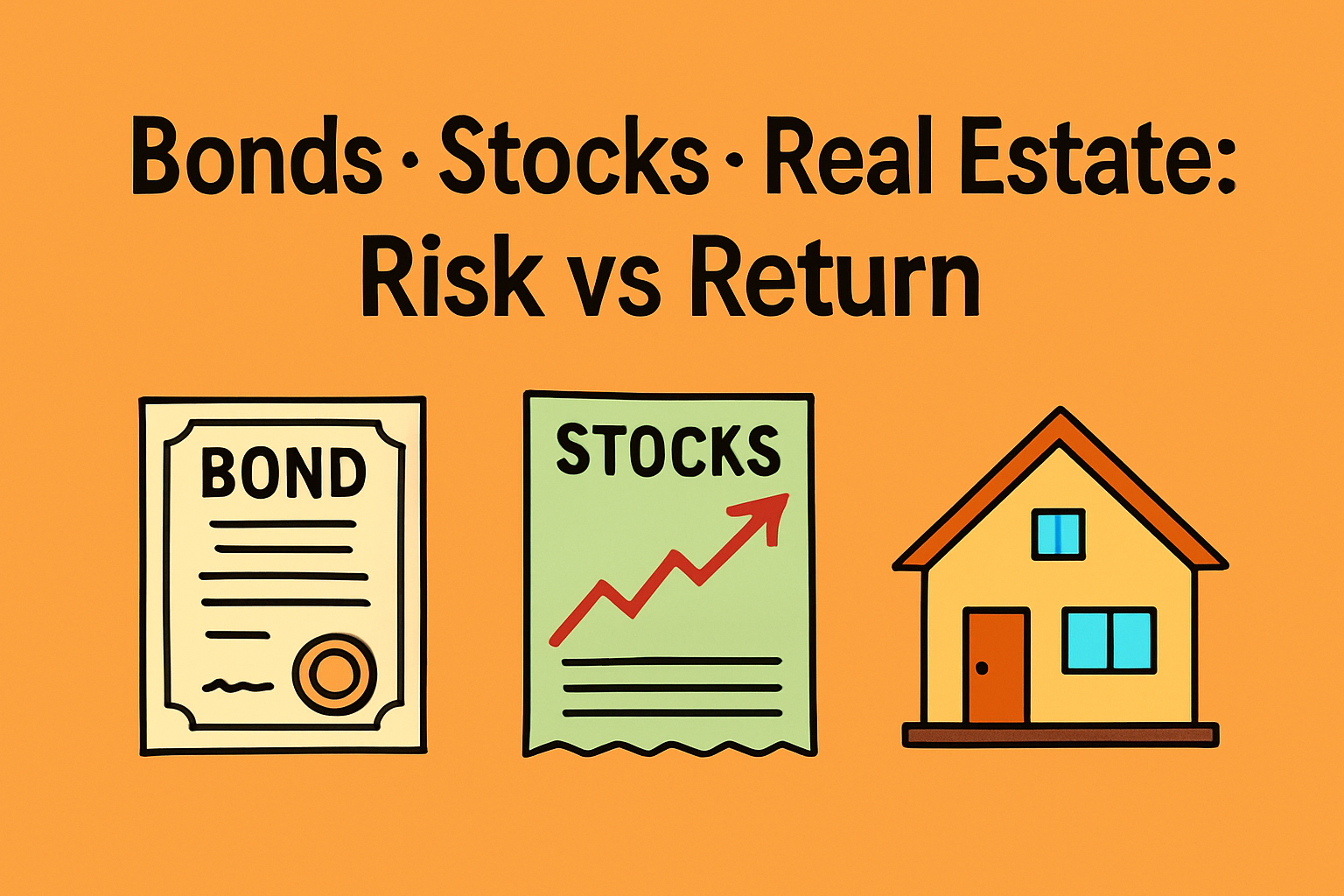
Bonds, Stocks, Real Estate: Comparing Risks and Returns by Asset Class
Investing Is About Balancing Risk and Return
When planning an investment, the first question is:
How much return can I expect, and how much risk can I handle?
Let’s compare the three major asset classes: Bonds, Stocks, and Real Estate.
“Safety, growth, or tangibility—which blend fits your goals?”
Using historical data and key metrics, we weigh returns, risks, and hedge power of the three core assets.
1. Asset Overview
- Bonds – Fixed-income securities from governments or companies; risk varies by maturity and credit.
- Equities – Ownership shares in firms, generating dividends and capital gains.
- Real Estate – Physical property; returns from rent and appreciation.
2. Long-Term Averages
| Bonds | 3–5 % | 4–7 % | High/Moderate | Low |
| Stocks | 7–10 % | 14–18 % | Very High | Medium |
| Real Estate | 4–8 % incl. rent | 6–10 % | Low | High |
Figures reflect global data 1980–2020; actual results vary by market.
3. Risk Breakdown
- Bonds – Interest-rate risk (prices fall as rates rise), credit risk (issuer default).
- Stocks – Market swings, business-specific shocks.
- Real Estate – Illiquidity, location & regulatory shifts.
4. Performance Across Economic Regimes
| Low-rate / Low-inflation | Good | Good | Fair |
| High-rate / High-inflation | Weak | Volatile, partial hedge | Relatively strong |
| Recession / Deflation | Treasuries shine | Weak | Sluggish turnover |
5. Portfolio Ideas
- Capital Preservation : Bonds 60 % + Dividend Stocks 25 % + REITs 15 %.
- Growth Tilt : Stocks 70 % + Long Bonds 15 % + Real Estate 15 %.
- Inflation Guard : Real Estate/REITs 40 % + TIPS 30 % + Cyclicals 30 %.
Rule of Thumb: Quantify return targets and risk tolerance, then exploit low correlations (bonds vs. stocks negative, stocks vs. property mildly positive) for diversification.
6. Decision Checklist
- Define objectives (return, horizon) and risk budget.
- Need liquidity? Favor bonds and listed ETFs.
- High inflation outlook? Add property or commodities.
- Rebalance per business-cycle stage.
- Net all costs—taxes, brokerage, stamp duty—for true returns.
7. Key Takeaways
- Bonds: Low volatility, rate & credit hazards.
- Stocks: High return potential, highest swings.
- Real Estate: Inflation shield, liquidity trade-off.
- Diversification exploits each asset’s strengths to offset weaknesses.
'경제' 카테고리의 다른 글
| 배당주·성장주·가치주, 어디에 넣어야 수익이 극대화될까?(Dividend, Growth, or Value? Pick Your Winning Style) (11) | 2025.05.01 |
|---|---|
| KOSPI·S&P 500, 숫자 뒤에 숨은 의미 완전 해부!(From Seoul to Wall Street: What the KOSPI & S&P 500 Tell Us) (13) | 2025.04.30 |
| 재난지원금, 단순 지원이 아니다? 경제 전체에 미치는 영향 정리 (19) | 2025.04.29 |
| 경기 침체엔 재정정책? 통화정책? 차이를 확실히 이해하기 (14) | 2025.04.29 |
| 확장-정점-수축-저점: 경제 파도 타는 법 (18) | 2025.04.29 |